
Walker County Genealogy Records
Walker County genealogy records date back to 1833, the year this county was carved out of Murray County in northwest Georgia. The Probate Court in LaFayette holds marriage records, wills, estate files, and guardianship papers that help trace family lines through the region. Walker County sits near the Tennessee border and has deep roots in both Cherokee and early settler history. Court records at the courthouse on South Duke Street cover births, deaths, marriages, land transfers, and civil cases spanning close to two centuries of local life.
Walker County Quick Facts
Walker County Probate Court Records
The Walker County Probate Court is the main source for marriage and estate records used in genealogy. This court holds marriage licenses from 1833 to the present. It also stores wills, letters of administration, guardianship files, and estate inventories. Under O.C.G.A. § 15-9-30, the Probate Court has full jurisdiction over wills, estates, guardianships, and marriage licenses in Walker County. Staff can help you find what you need if you visit in person or call ahead.
You can request records by mail or in person at the courthouse. Send a written request with the full name of the person and approximate date of the record you need. Include a self-addressed stamped envelope. Copy fees are typically $1 per page and certified copies cost more. Payment is usually by money order or check. Call the clerk to confirm current fees before you send anything. Walker County records go back nearly 190 years, so older documents may take more time to locate.
| Address | 103 S. Duke Street, LaFayette, GA 30728 |
|---|---|
| Phone | (706) 638-1400 |
| Hours | Monday - Friday, 8:30 AM - 5:00 PM |
Note: Call ahead to verify hours and fees, as Walker County may adjust schedules for holidays or staffing changes.
Vital Records for Walker County Genealogy
Georgia did not start statewide vital records until 1919. That means birth and death records for Walker County before that year are hard to find at the state level. For pre-1919 records, check church registers, cemetery records, and family Bibles. The Georgia Archives in Morrow has some early Walker County records on microfilm, and the Virtual Vault offers free access to death certificates from 1919 to 1943.
For records from 1919 forward, the Georgia Department of Public Health handles birth and death certificates. Birth certificates cost $25 for the first copy. Death certificates cost the same. Under O.C.G.A. § 31-10-26, certified birth certificates are only available to the person named, parents, grandparents, adult siblings, adult children, spouses, or legal guardians. Death certificates have fewer restrictions and are more widely available for genealogy work.
Marriage records in Walker County go back to 1833. The Probate Court keeps these on file. State-level marriage records exist only for 1952 to 1996. For marriages outside that window, you must go to the county. The Georgia Department of Public Health can help with state-level requests.
Note: The 1952 to 1996 state marriage index is a useful cross-reference, but the original documents remain at the Walker County Probate Court.
Walker County Superior Court Genealogy
The Walker County Superior Court Clerk holds land records, divorce files, and civil and criminal case records dating to 1833. Deed books show property transfers between family members. These can help you trace where your ancestors lived and who they did business with. Divorce records often list children, property, and ages that fill in gaps left by other documents.
Under O.C.G.A. § 50-18-70, most court records in Walker County are open to the public. You can visit the clerk's office in the courthouse on South Duke Street in LaFayette. Land records are especially useful because they often name neighbors, which helps place families in a specific area. Old plat maps can show the exact boundaries of land your ancestors owned.
Walker County GAGenWeb Genealogy
The Georgia Probate Courts Directory is a helpful starting point for finding court contact details across the state, including Walker County.
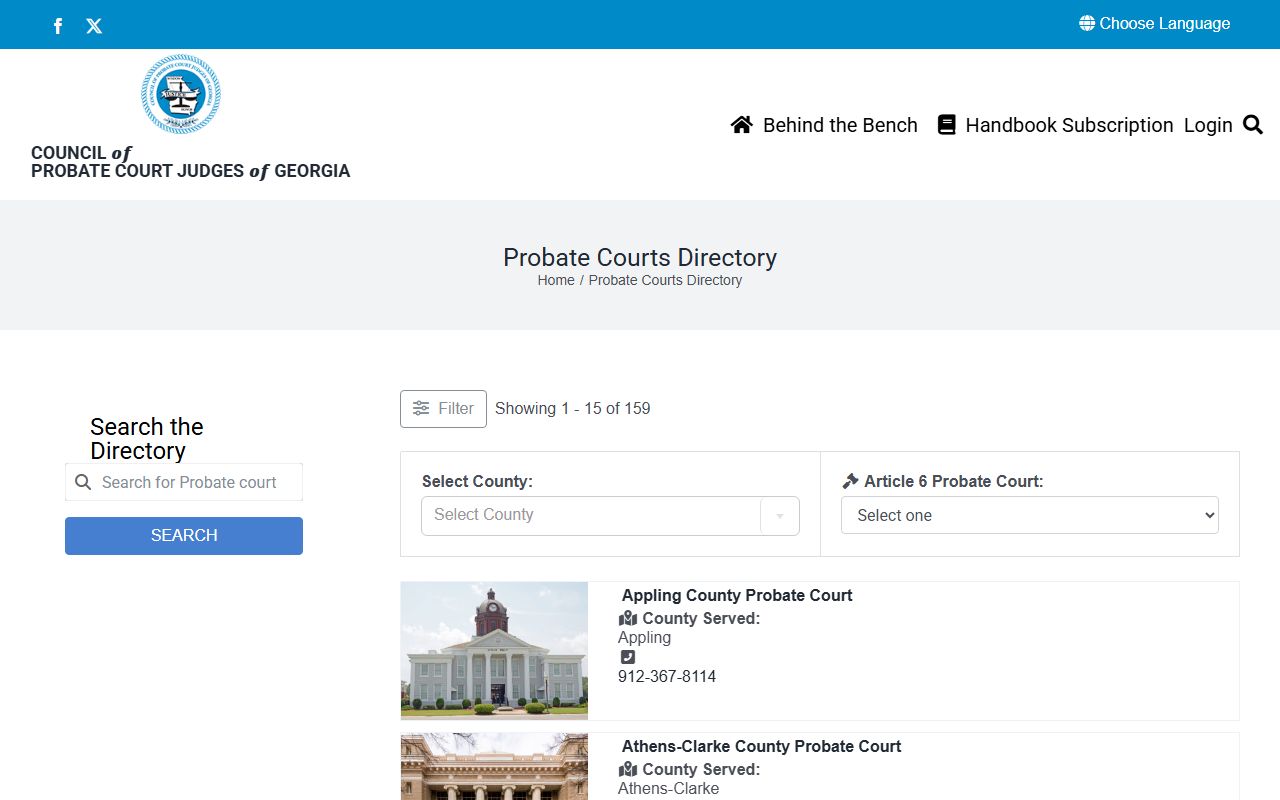
This directory lists the address, phone number, and judge for every probate court in Georgia. Use it to confirm Walker County contact details before making a trip to LaFayette.
Free online resources for Walker County genealogy include FamilySearch, which has Georgia marriages from 1754 to 1960, probate records from 1742 to 1990, and death records from 1914 to 1943. The Georgia Historic Newspapers archive has over one million pages of old Georgia newspapers with obituaries, legal notices, and family announcements that can help with Walker County research.
Walker County Records at Georgia Archives
The Georgia Archives in Morrow holds pre-1900 Walker County records on microfilm. These include marriage records, estate files, deed books, and court minutes. The search room offers free access to Ancestry.com, FamilySearch.org, and Fold3. Staff can help you navigate the card catalog and find the right microfilm reels for Walker County.
Federal census records for Walker County are available from 1840 through 1940 at the Georgia Archives. Keep in mind that the 1890 census was destroyed, so there is a gap between 1880 and 1900. Tax digests from that period can help fill the hole. The 1850 census was the first to list each household member by name and age, which makes it especially valuable for Walker County genealogy. The archives are at 5800 Jonesboro Road, Morrow, GA 30260, open Tuesday through Saturday from 9:00 AM to 4:00 PM.
Note: Pre-1900 records are on microfilm at the Georgia Archives; post-1900 records must be obtained directly from the Walker County courthouse in LaFayette.
Genealogy Research Tips for Walker County
Start with what you know. Write down all names, dates, and places for your Walker County family. Then work backward one generation at a time. Census records are often the best next step. Walker County first appears in the 1840 federal census. For earlier records, check neighboring counties that existed before Walker was formed.
Walker County was created from Murray County in 1833. If your ancestors were in this part of Georgia before that year, look in Murray County records. Boundary changes matter a lot in Georgia genealogy. The state has 159 counties and borders shifted often during the 1800s. The Virtual Vault has a free resource called "Georgia Counties: Their Changing Boundaries" that shows which county your ancestors would have been counted in for any given year.
- Check cemetery records when vital records are missing
- Search church records for baptisms, marriages, and burials
- Look at Family Bible records (45 volumes on microfilm at Georgia Archives)
- Use the Vanishing Georgia collection for historical photos from Walker County
- Review estate records when birth or death dates are unknown
Under O.C.G.A. § 50-18-71, the Georgia Open Records Act caps copy fees at 10 cents per page for standard letter or legal size documents from public agencies. Court records may have different fee structures set by local rules. Always confirm the total cost before you pay.
Cities in Walker County
Walker County includes the cities of LaFayette, Chickamauga, Rossville, and Fort Oglethorpe. All genealogy records for these cities are maintained at the Walker County Probate Court and Superior Court Clerk in LaFayette. None of these cities meet the population threshold for a dedicated city page, but the county courthouse handles all record requests for every community in Walker County.
Nearby Counties
These counties border Walker County. If your ancestors moved within this area, check neighboring county records as well. County lines changed often in Georgia, so an ancestor counted in Walker County one decade might appear in a different county the next.