
Search Georgia Genealogy
Georgia genealogy records span more than two centuries of family history across all 159 counties. The state holds birth and death certificates, marriage licenses, wills, estate files, land deeds, and military service records that help you trace your roots. The Georgia Archives in Morrow is the main repository for state and county records going back to 1733. Many of these records can now be searched online through the Virtual Vault and other free databases. County courthouses still keep original documents. This guide covers the key resources, offices, and databases you can use to search Georgia genealogy records from any starting point.
Georgia Genealogy Quick Facts
Georgia Archives Genealogy Collections
The Georgia Archives is the state's main genealogy resource. It sits at 5800 Jonesboro Road in Morrow and is open Tuesday through Saturday from 9:00 AM to 4:00 PM. Staff can help you find records and point you in the right direction. The search room offers free access to Ancestry.com, FamilySearch.org, and Fold3. You can use book copiers, scanners, and a microfilm library with a card catalog. Free handouts on ancestry charts and research guides are on hand for anyone doing Georgia genealogy work.
The Archives holds county records from the Superior Court and Probate Court for most of Georgia's 159 counties. These pre-1900 records include marriage certificates, estate files, wills, inventories, deeds, and guardianship papers. State government records at the Archives include Confederate Pension Applications, death certificates from 1919 to 1943, colonial land grants, property tax digests from 1874 to 1890, and the Central Register of Convicts. Special collections hold the Vanishing Georgia Photographic Collection with 18,000 images and Family Bible Records on microfilm. All of these make the Archives the first stop for serious Georgia genealogy research.
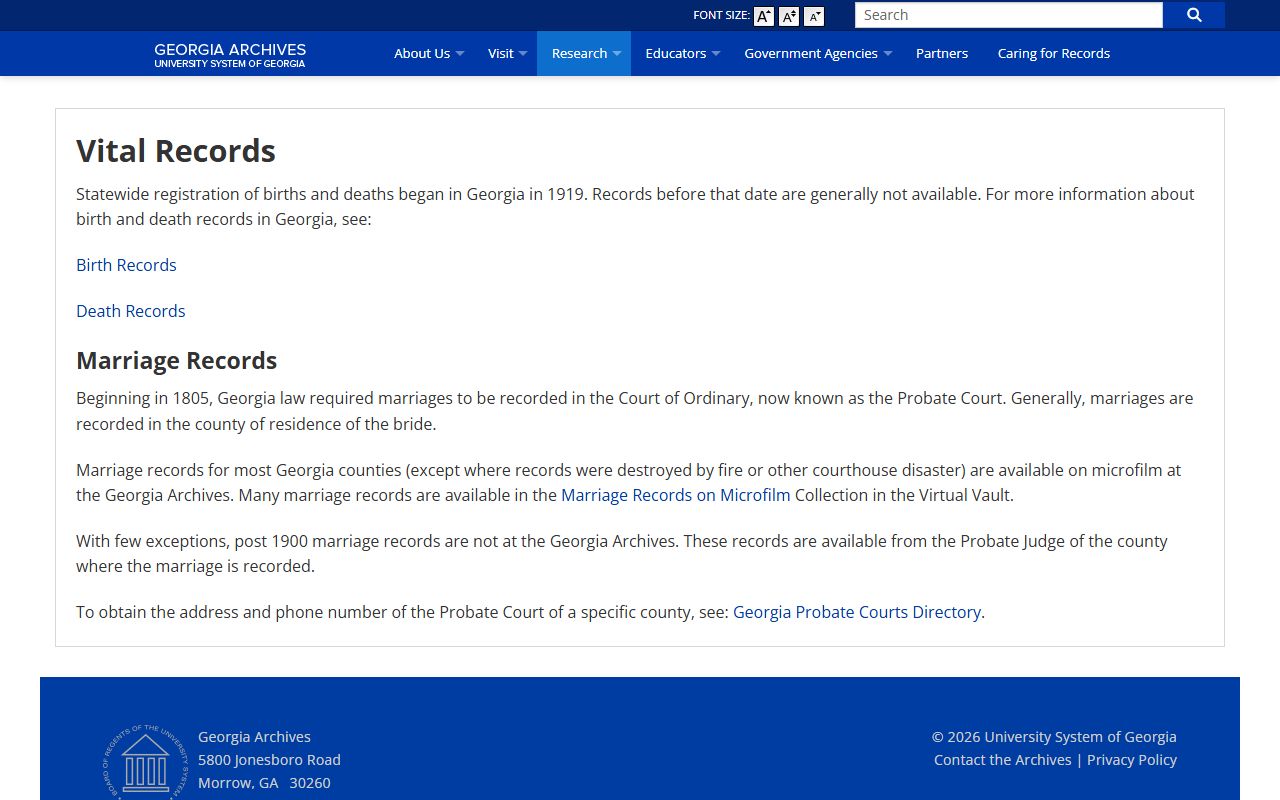
The Georgia Archives vital records page outlines what is available for genealogy researchers and how to access key document types held at the facility.
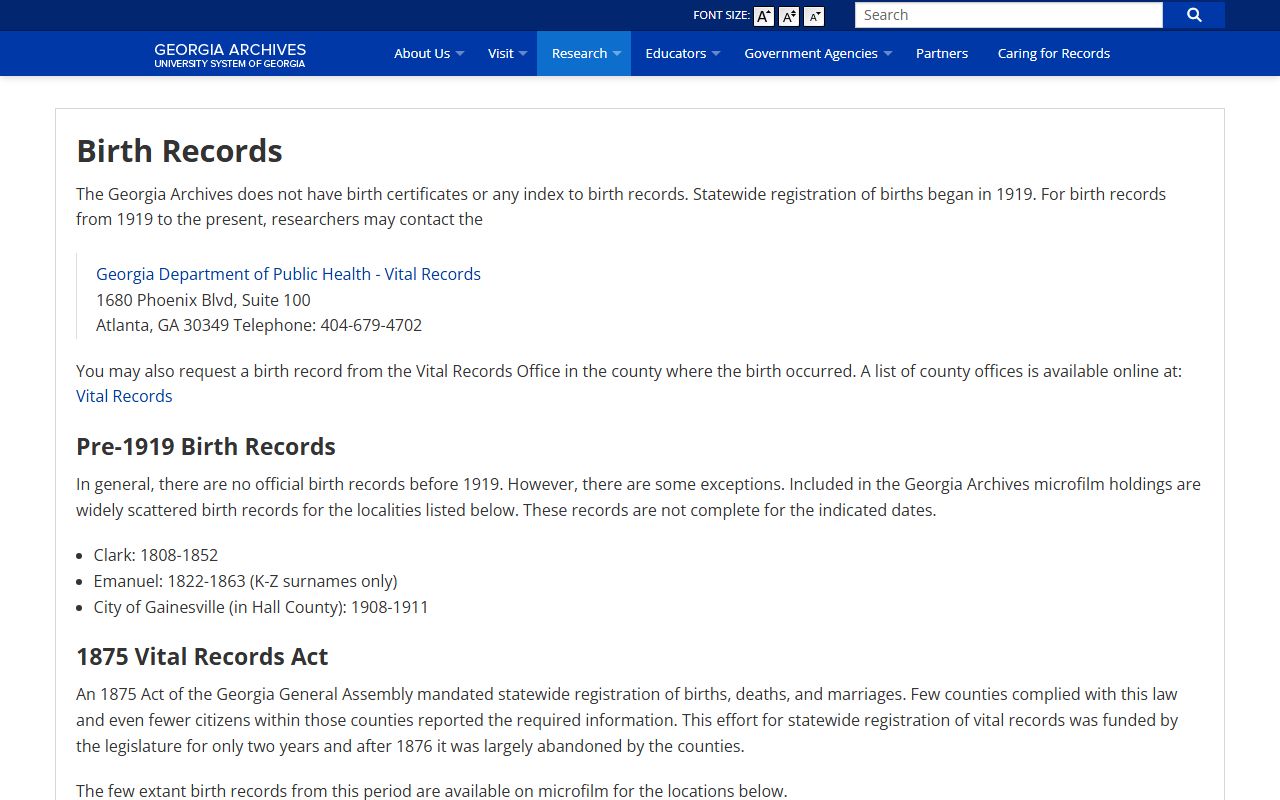
Birth and death records at the Archives cover different time periods. The birth records section explains what is on file and where to look for records that predate statewide registration.
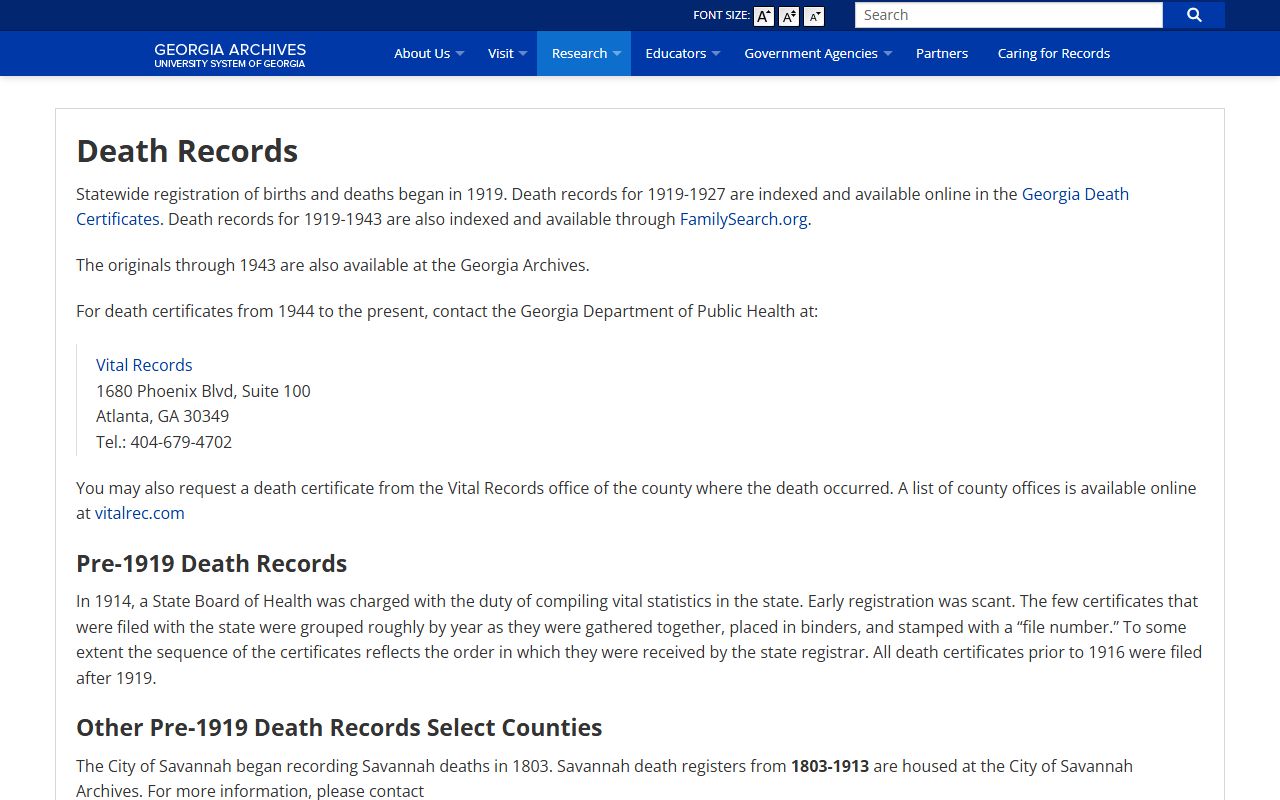
Georgia began statewide death registration in 1919. The death records page shows what the Archives holds and how to search these files for Georgia genealogy purposes.
Note: Post-1900 county records are generally not at the Georgia Archives; contact the county courthouse for those.
Georgia's Virtual Vault for Genealogy
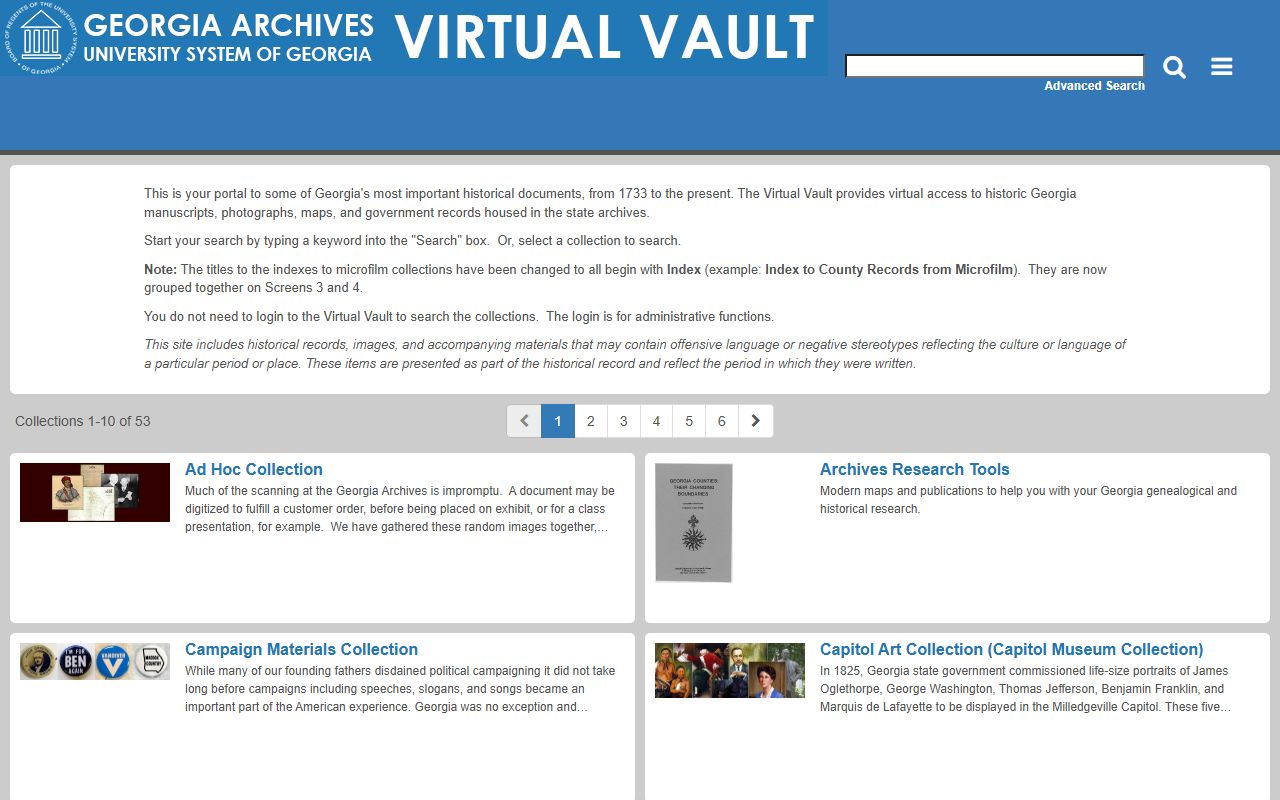
Georgia's Virtual Vault gives you free online access to historic manuscripts, photographs, maps, and government records from the state archives. The portal holds 53 or more collections covering the years 1733 to the present. You can search from home at any time. This is one of the best free tools for Georgia genealogy.
Key genealogy collections in the Virtual Vault include Georgia Death Certificates from 1919 to 1943, marriage records from microfilm, colonial wills and estate records, Confederate muster rolls and pension applications, colonial plats and warrants, headright and bounty plats, county tax digests from 1785 to 1799, and the File II Names index. The Vanishing Georgia collection alone has 18,000 historical photographs. Chatham County deed books and historic maps round out the offerings. Under O.C.G.A. § 50-18-71, public records in Georgia are open for inspection and copies cannot cost more than 10 cents per page for standard sizes. The Virtual Vault puts many of these records online for free.
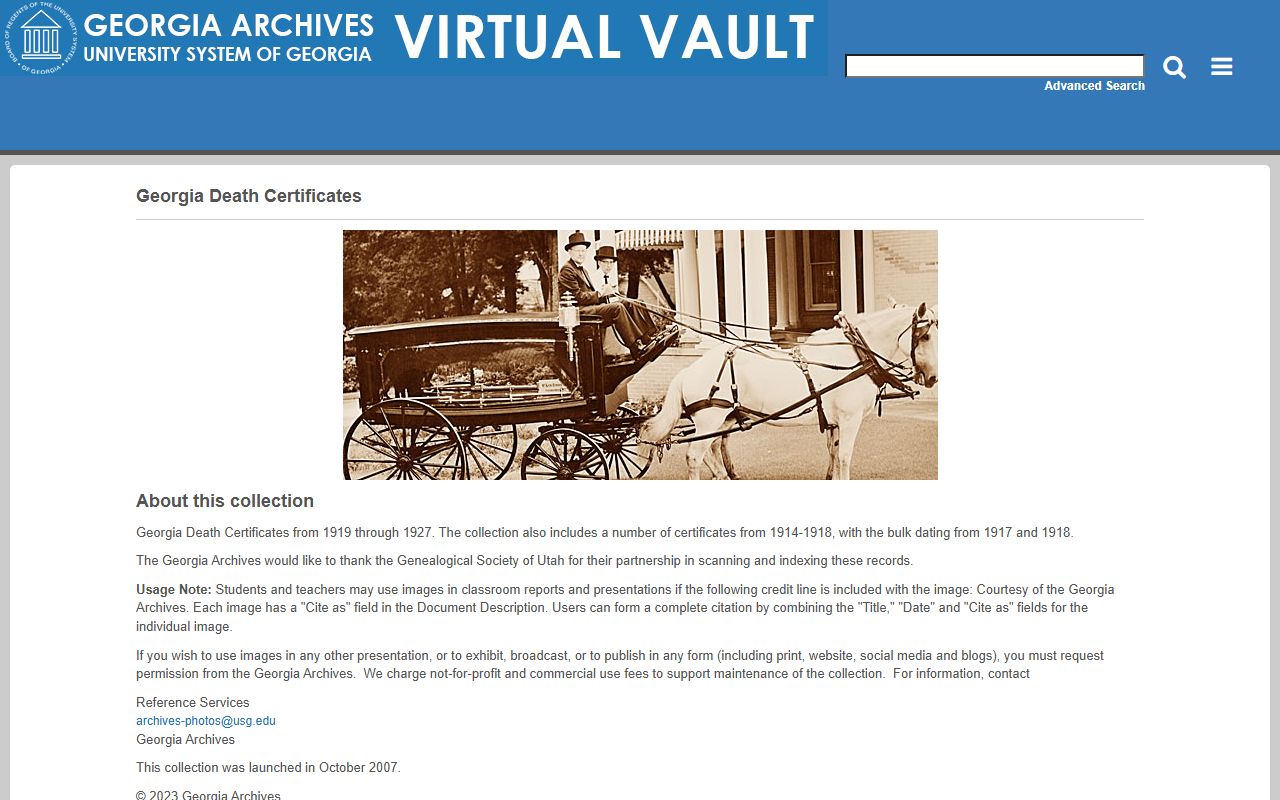
The Virtual Vault also hosts the Georgia Death Certificates database with indexed records from 1919 to 1927 and images through 1943. This is a core resource for Georgia genealogy.
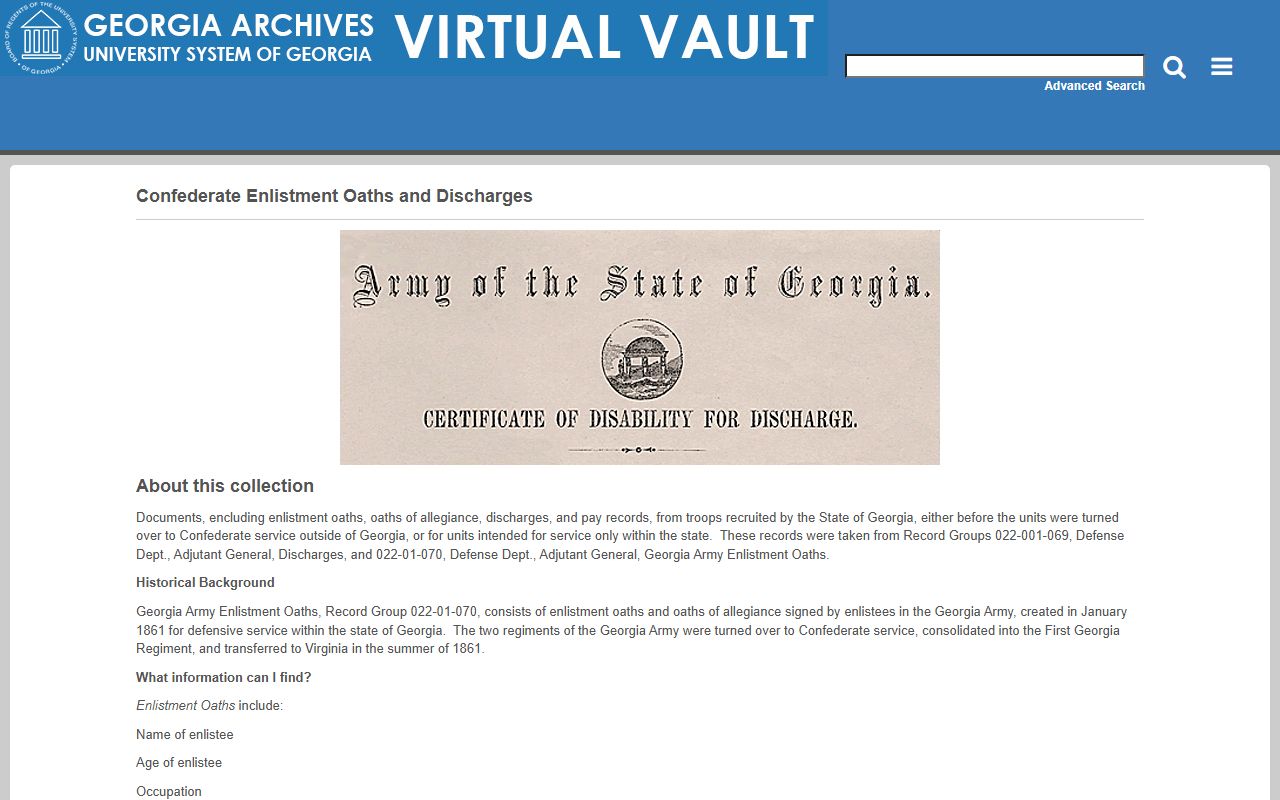
Military records are another strong suit. The Confederate Pension Applications collection holds records filed by Georgia veterans and their widows from 1879 to 1960.
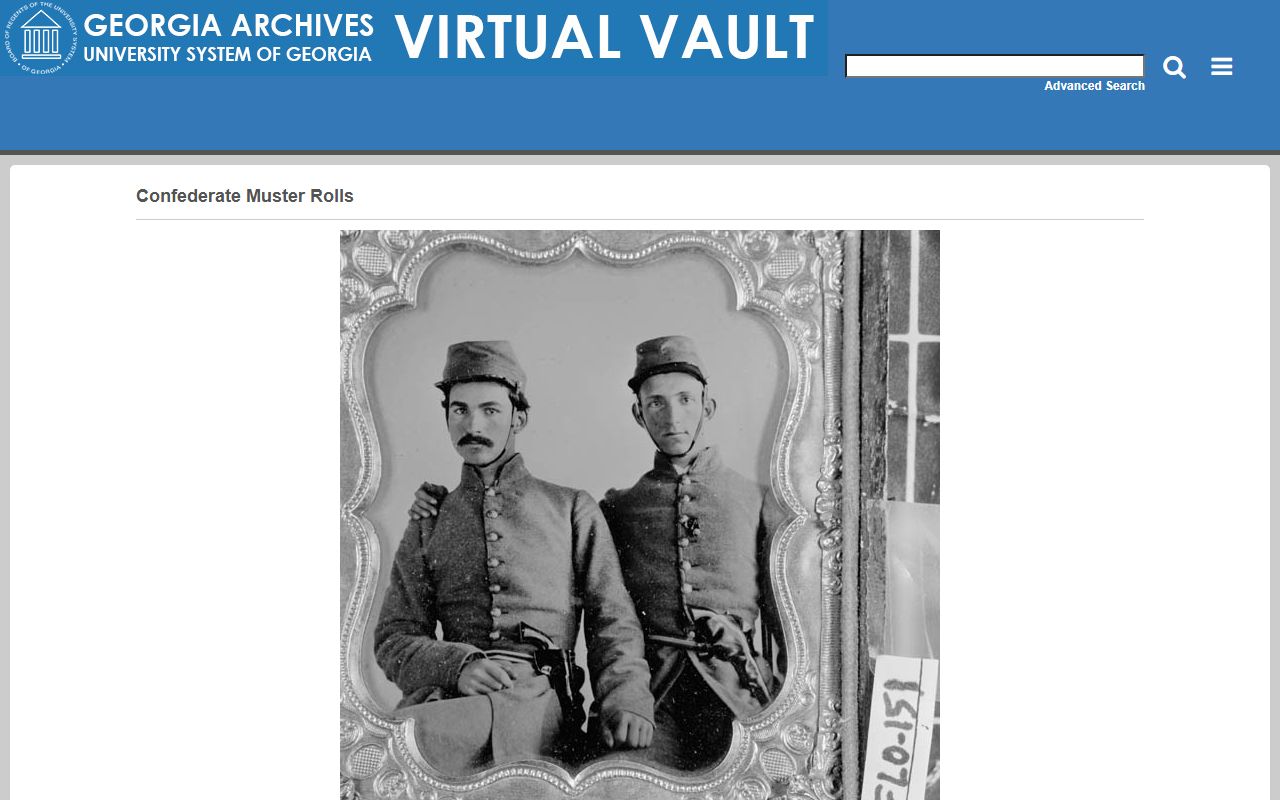
The Confederate Muster Rolls provide another way to track ancestors who served during the Civil War. These rolls list names, ranks, and unit details.
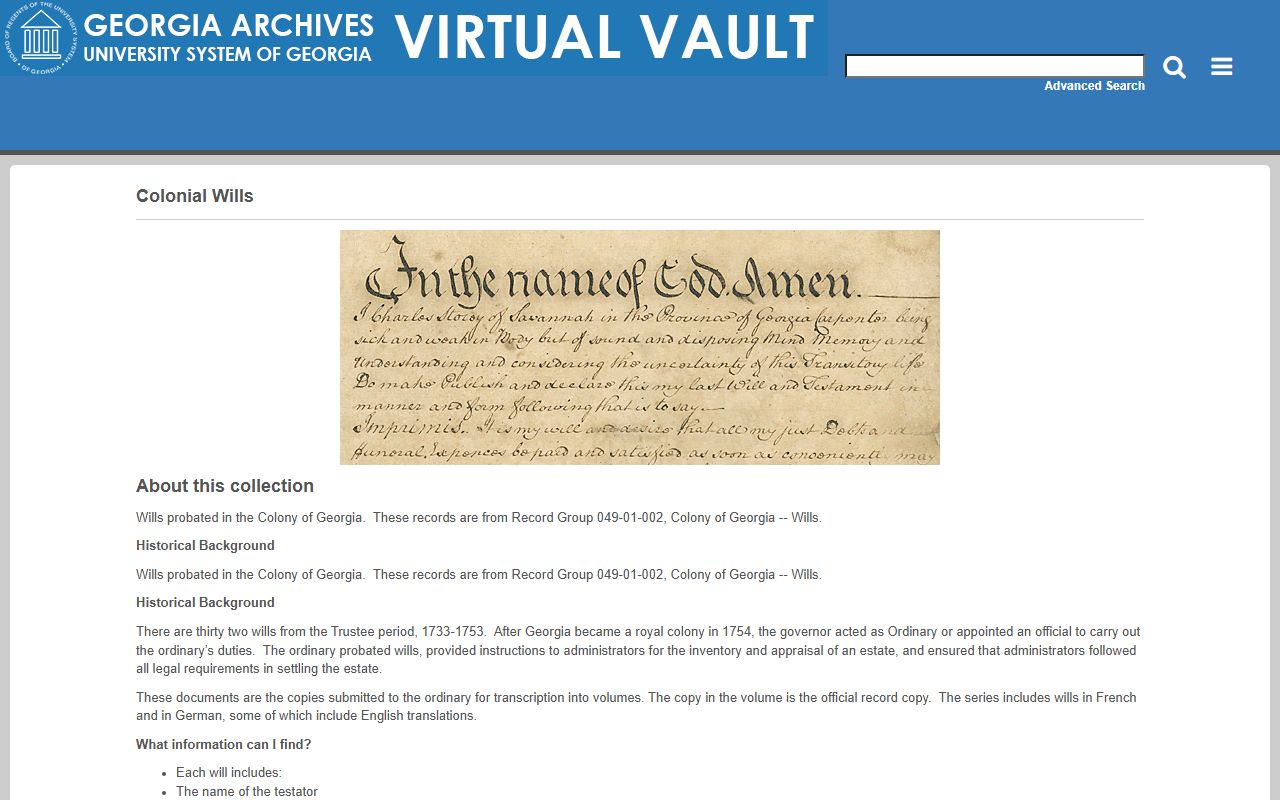
Colonial-era researchers can search the Colonial Wills collection for estate records dating back to the 1700s in Georgia.
Georgia Vital Records for Genealogy Research
The Georgia Department of Public Health maintains vital records from 1919 to the present. Their office is at 1680 Phoenix Blvd, Suite 100, Atlanta, GA 30349. You can reach them at (404) 679-4702. They handle birth certificates, death certificates, and marriage and divorce records from 1952 to 1996 at the state level. Under O.C.G.A. § 31-10-26, certified copies of birth certificates are limited to the person named, parents, grandparents, adult siblings, adult children, legal spouses, and legal guardians. Death certificates and other vital records have broader access rules for Georgia genealogy research.
The DPH Vital Records portal lets you order certificates online, by mail, or in person at any of the 159 county vital records offices across Georgia.

Birth certificates cost $25 for the first copy and $5 for each extra. Death certificates run the same. Marriage certificates cost $10 plus $5 for extras. Georgia law requires payment before records are sent. If the record is not on file, you get a not-on-file letter. All 159 county health offices can issue birth and death certificates for Georgia genealogy needs.
Some Georgia cities kept vital records before the state started in 1919. Atlanta has birth records from 1896 and death records from 1889. Savannah holds death registers from 1803 to 1913. Augusta has death records from 1904. Columbus has birth and death indexes from 1890. Macon has birth records from 1891 and death records from 1882. These early city records are gold for Georgia genealogy research before statewide registration began.
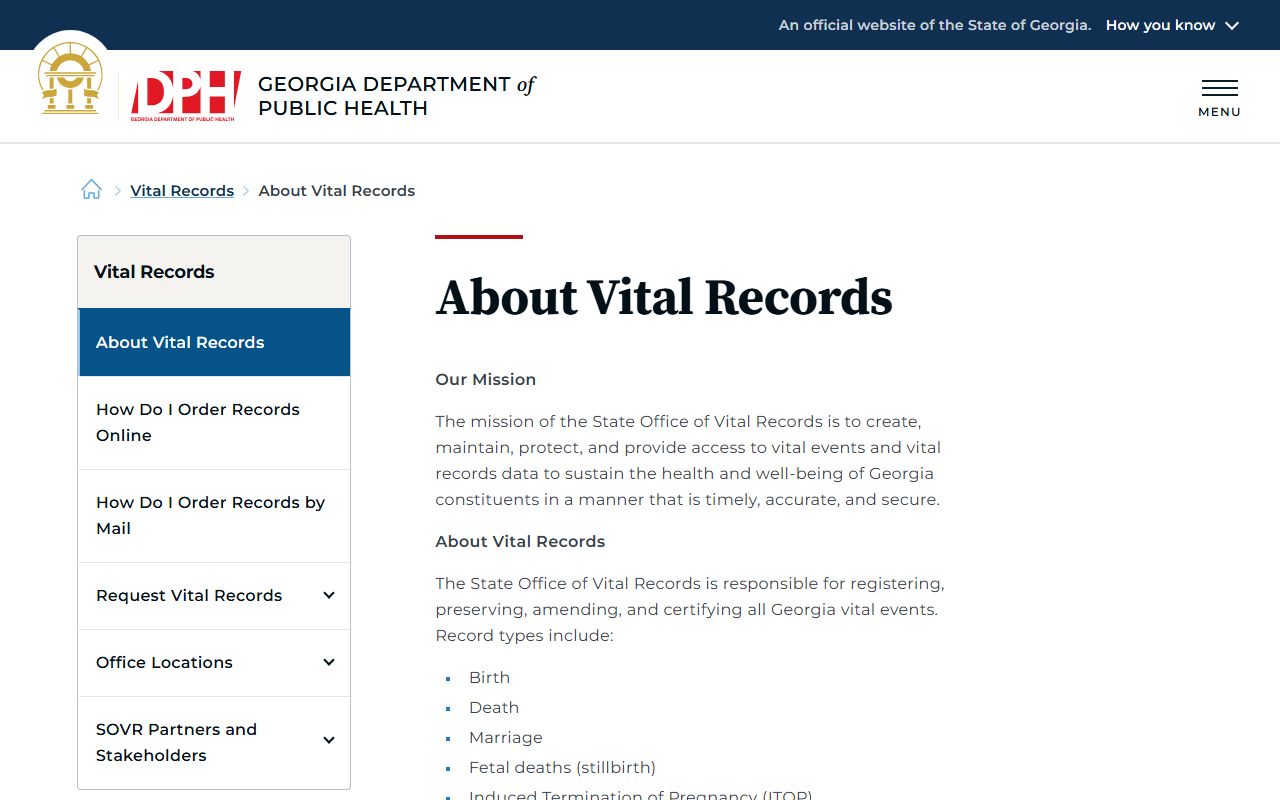
The About Vital Records page covers the full scope of what the state office holds and how each record type works.
Georgia Probate Courts and Genealogy
Probate Courts in Georgia are a key source for genealogy records. Before 1974, these were called the Court of Ordinary. Before 1851, the Inferior Court handled probate functions. Today each of the 159 counties has a Probate Court that handles marriage licenses, wills, estate records, guardianship papers, and apprenticeship registers. Under O.C.G.A. § 15-9-30, probate courts have jurisdiction over the probate of wills, administration of estates, guardianships, conservatorships, and marriage licenses. Marriage records in Georgia go back to 1805 at the county level. The Georgia Archives holds most pre-1900 marriage records on microfilm.
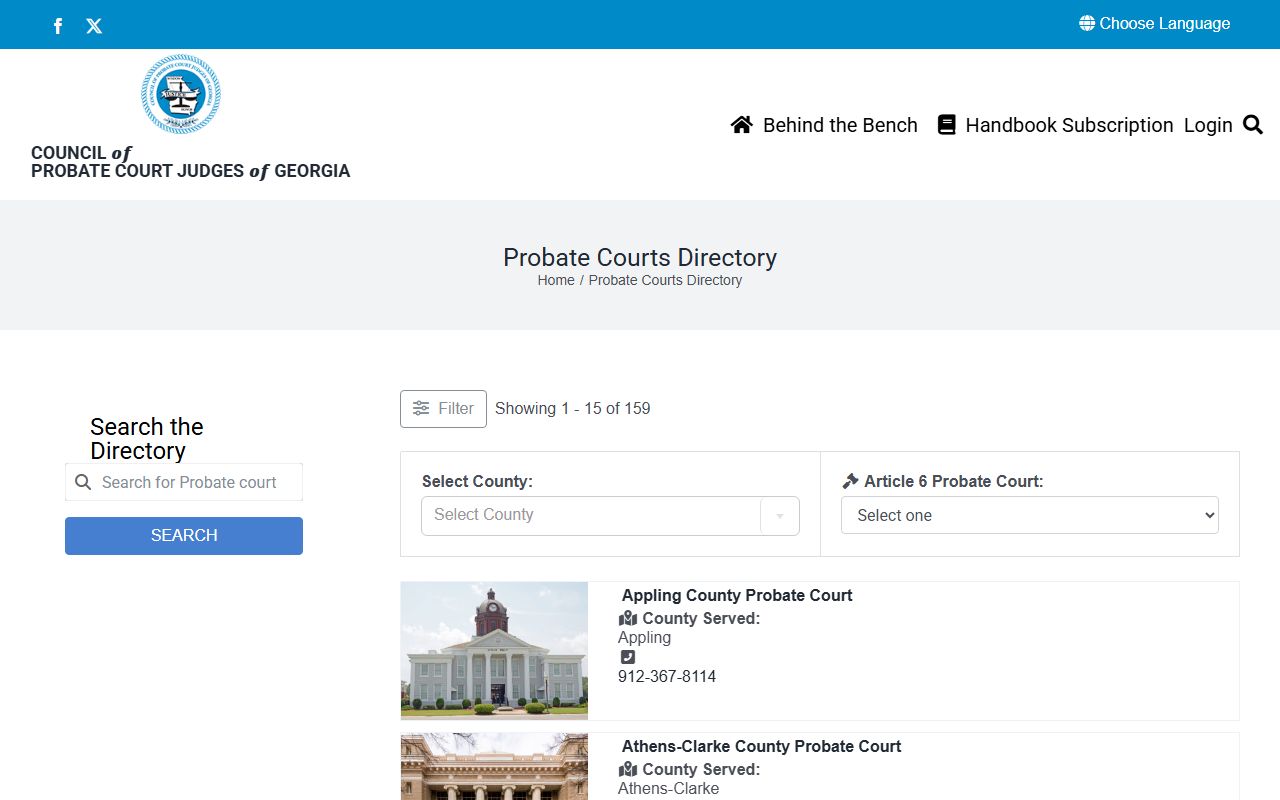
The Georgia Probate Courts Directory lists contact information for every probate court in the state. Use it to find the right office for your Georgia genealogy search.
Superior Courts in Georgia also hold genealogy records. They maintain deeds, land records, civil and criminal case files, divorce records, property tax digests, and voter registration lists. Superior Courts have been around since 1777. Divorce records sit with the Clerk of Superior Court in the county where the case was filed. Under the Georgia Open Records Act, O.C.G.A. § 50-18-70, most court records are public and open to anyone. You do not need to state a reason for your request.
Historic Newspapers for Georgia Genealogy
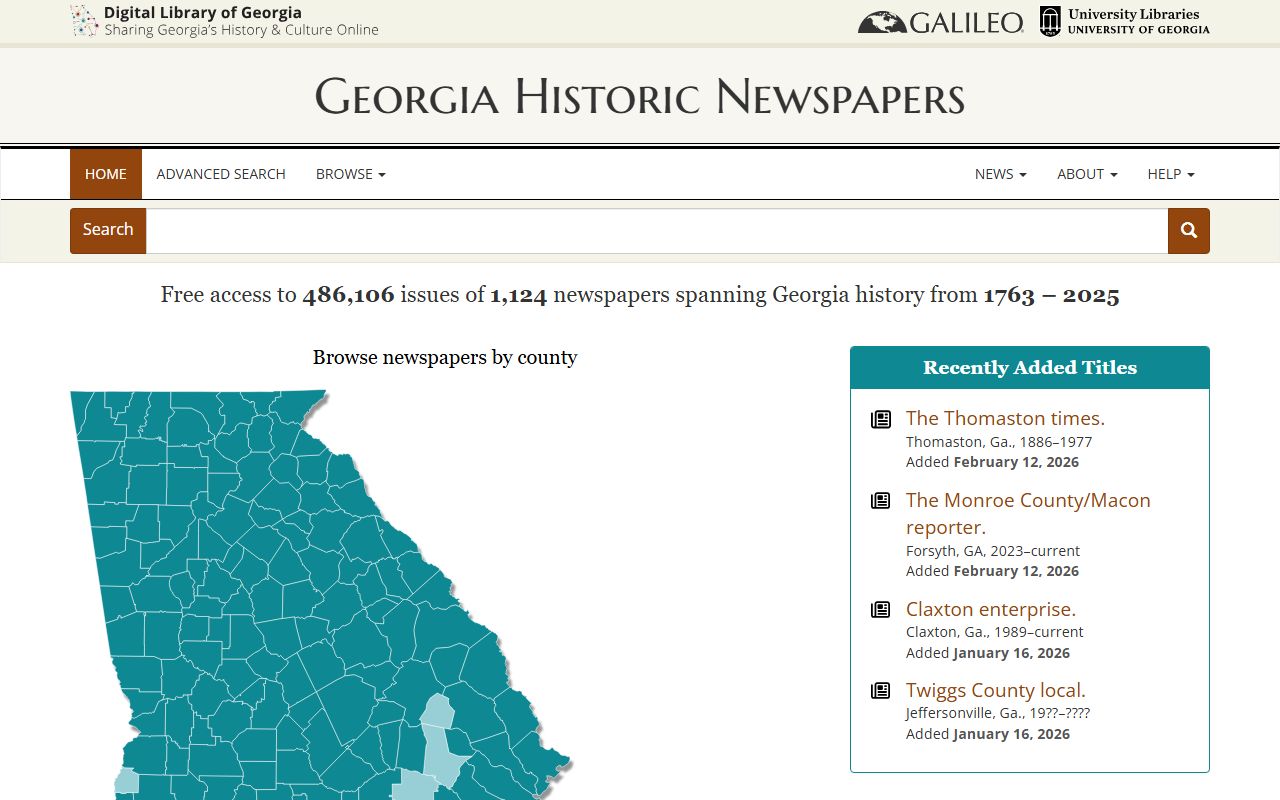
Georgia Historic Newspapers is a free project of the Digital Library of Georgia based at the University of Georgia Libraries. It holds over one million newspaper pages covering 1786 to 1986. You can search obituaries, legal notices, marriage announcements, and local news from across the state. This is one of the most useful tools for Georgia genealogy when vital records are not available.
Newspapers fill gaps that other records leave behind. Church notices, election results, court reports, and social columns can reveal family connections that no government file shows. Many Georgia families can be traced through newspaper mentions when census or vital records are missing or were destroyed.
Federal Records for Georgia Genealogy
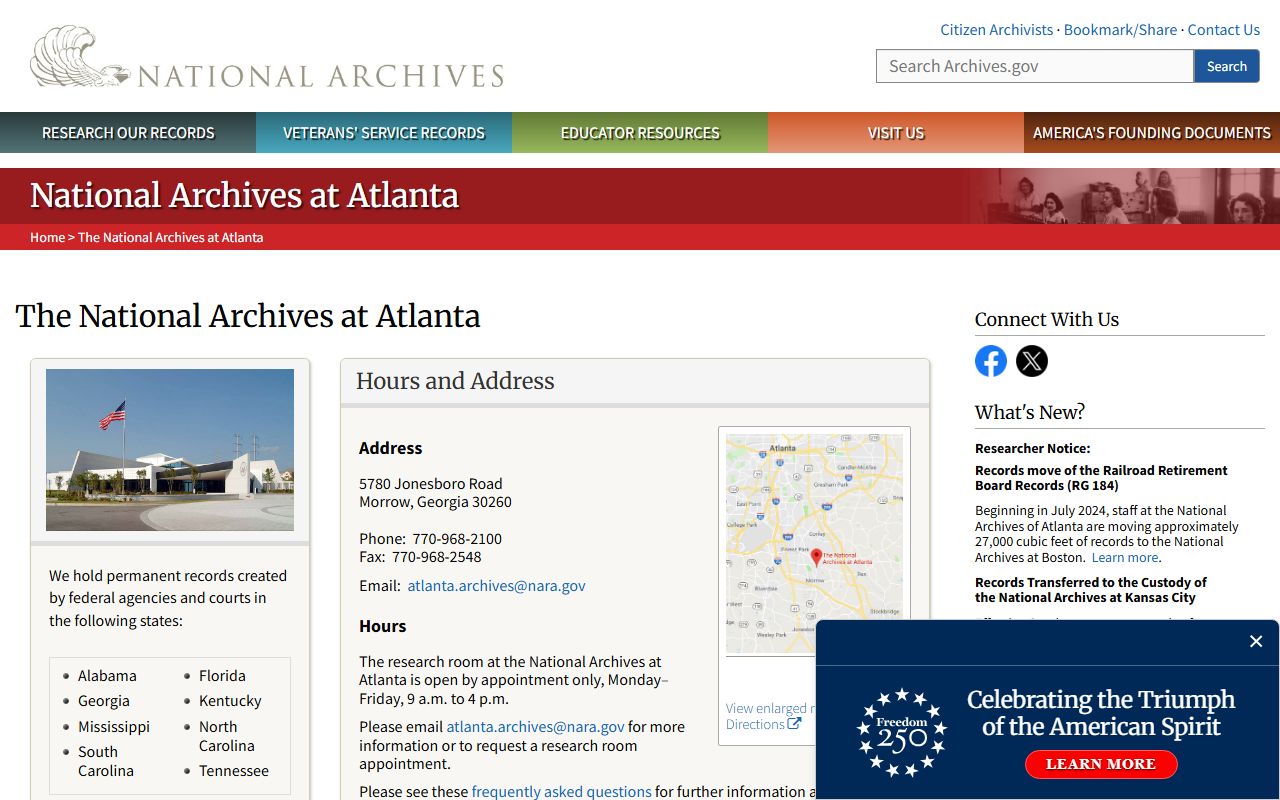
The National Archives at Atlanta is located at 1557 St. Joseph Avenue in East Point, GA 30344. You can call them at (404) 763-7477. They hold U.S. Census records, the Social Security Death Index, federal land patent records, naturalization records, military service files, and maps. Census records are available through 1940. Keep in mind that the 1790, 1800, 1810, and 1890 federal census records for Georgia were destroyed. Tax digests from those periods can help fill the gap in your Georgia genealogy research.
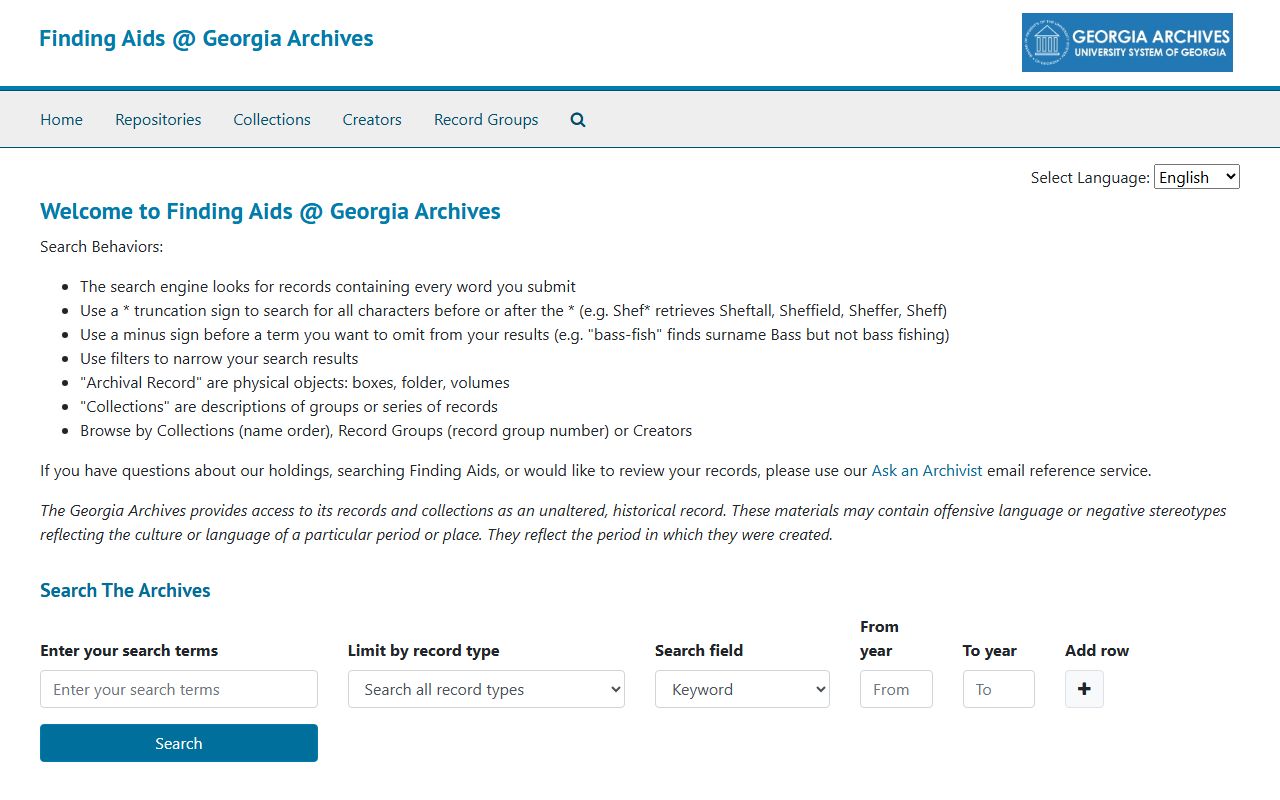
The Georgia Archives Finding Aids can help you locate specific record groups and collections held at the state level. The finding aids describe what each collection contains and how it is organized.
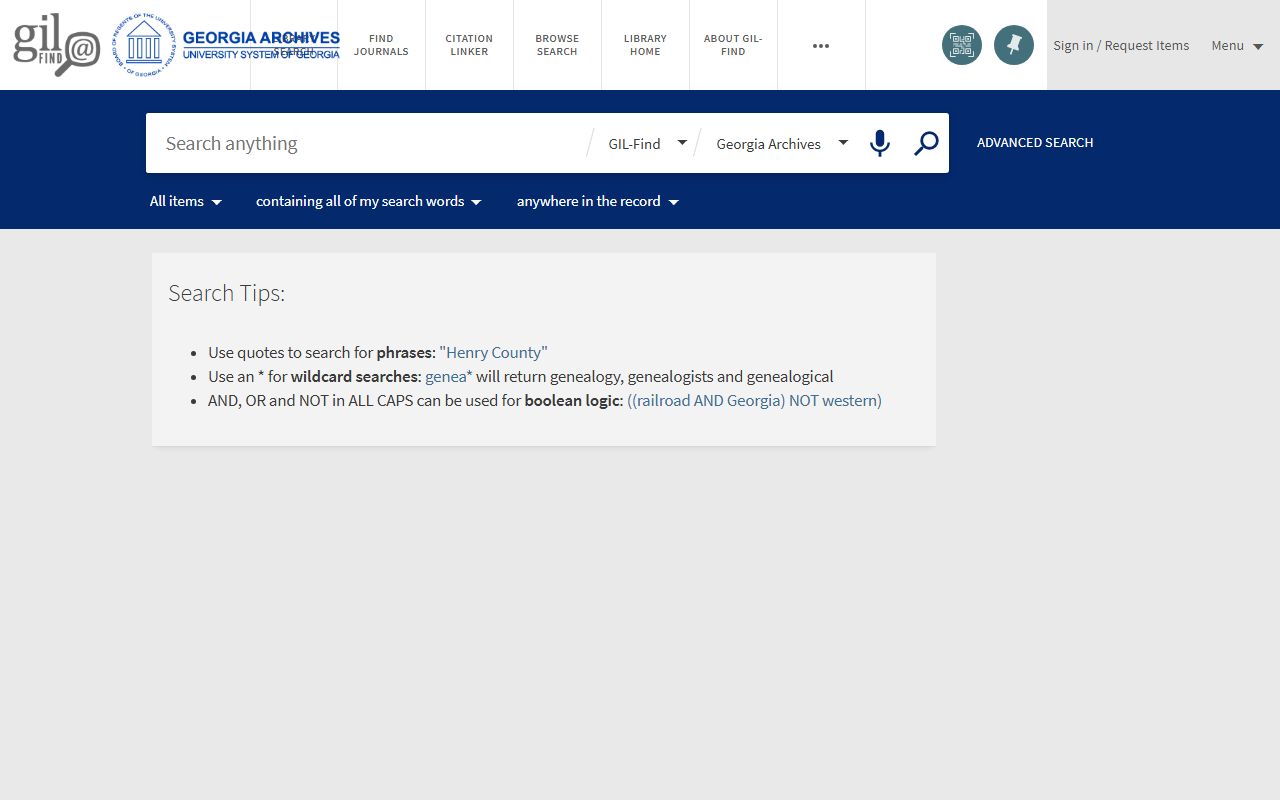
The Georgia Archives online catalog lets you search across all collections in the state archives system from home.
Free Online Databases for Georgia Genealogy
FamilySearch.org offers free Georgia databases that cover births, christenings, marriages, deaths, probate records, military service files, and naturalization records. Key collections include Georgia Deaths from 1914 to 1943, Georgia County Marriages from 1785 to 1950, Georgia Probate Records from 1742 to 1990, and Georgia Naturalization Records from 1893 to 1991. All are free to search and most include images of the original documents. This makes FamilySearch one of the strongest free tools for Georgia genealogy.
Ancestry.com requires a paid subscription but is free at the Georgia Archives and many public libraries. It holds the Georgia Death Index from 1919 to 1998, Georgia Wills and Probate Records from 1742 to 1992, marriage records from select counties, property tax digests from 1793 to 1892, and the Savannah Vital Records collection from 1803 to 1965. The Georgia Genealogical Society also provides publications, research guides, and networking for people doing Georgia genealogy.
The Digital Library of Georgia connects users to over one million digital objects in 110 collections from 60 institutions. It serves as a gateway to Georgia history and culture through books, manuscripts, photographs, government documents, newspapers, and maps.
Georgia Genealogy Research Tips
Start with what you know. Write down every fact about yourself, your parents, and your grandparents. Make a pedigree chart and keep it up to date as you find new information. Use pencil so you can fix mistakes. Then work backward one generation at a time.
Census records are often the next step. Federal census records were taken every ten years starting in 1790. The 1850 census was the first to list every person in a household with their age. The 1900 census gives the month and year of birth. Mortality schedules for 1850, 1860, 1870, and 1880 list deaths in the twelve months before the count. These are all useful for Georgia genealogy. When vital records do not exist, check cemetery records, church records, Family Bible records, county estate records, tax digests, school records, and newspaper notices. Georgia has 159 counties that were created between 1777 and 1924. County lines changed often, so use the "Georgia Counties: Their Changing Boundaries" resource in the Virtual Vault to check which county your ancestors lived in at the time.
- Search census records through 1940 at the Georgia Archives
- Check the Virtual Vault for free digitized records
- Contact the Probate Court for marriage and estate records
- Use the Superior Court Clerk for deeds and divorce records
- Search newspapers for obituaries and legal notices
- Visit local libraries with genealogy rooms
The Georgia Open Records Act, O.C.G.A. § 50-18-70, ensures that most government records are open to the public. Agencies must produce records within three business days of a request. Penalties under O.C.G.A. § 50-18-74 include fines up to $1,000 for a first violation and $2,500 for repeat violations within twelve months. This law helps protect your right to access Georgia genealogy records at county and state offices.
Note: Always verify information found online against original documents when doing Georgia genealogy research.
Browse Georgia Genealogy by County
Each of Georgia's 159 counties keeps its own genealogy records at the courthouse. Pick a county below to find local Probate Court and Superior Court contact info, record dates, and research resources.
Genealogy in Major Georgia Cities
Many Georgia cities have local libraries, historical societies, and archives with genealogy collections. City residents file vital records through their county offices. Pick a city to find where your records are kept.