
Search Terrell County Genealogy Records
Terrell County genealogy records date to 1856, when the county was created from Lee and Randolph counties in southwest Georgia. The Probate Court in Dawson holds marriage licenses, wills, estate files, and guardianship papers from that year forward. Land deeds, court cases, and divorce records are at the Superior Court Clerk office. Terrell County was an important agricultural center before and after the Civil War, and the courthouse records document the families who worked this land across multiple generations. Researchers tracing southwest Georgia roots will find a useful collection of primary documents in Dawson.
Terrell County Quick Facts
Terrell County Probate Court Records
The Terrell County Probate Court handles marriage and estate records. Marriage licenses go back to 1856. Wills, letters of administration, guardianship files, and estate inventories are held here. Under O.C.G.A. § 15-9-30, the Probate Court has jurisdiction over wills, estates, guardianships, conservatorships, and marriage licenses.
The courthouse is at 235 E. Lee Street in Dawson. The phone number is 229-995-4461. Visit in person to search records or send a mail request with names, dates, and a check or money order for the search fee. Certified copies cost more than plain copies. Call ahead for current fees and office hours.
Estate records in Terrell County are useful genealogy sources. Wills name heirs and describe property. Inventories list what a person owned at death. For the antebellum period, these records may include lists of enslaved people, which are an important source for African American genealogy research.
| Address | 235 E. Lee Street, Dawson, GA 39842 |
|---|---|
| Phone | 229-995-4461 |
| Hours | Monday - Friday, 8:00 AM - 5:00 PM |
Note: The Court of Ordinary handled these records before 1974. All older files were transferred to the Probate Court.
Terrell County Superior Court Genealogy
The Superior Court Clerk holds land records, divorce files, and court cases from 1856 onward. Deed books track property changes. Plat maps show parcel locations. These records help you find where your ancestors lived in Terrell County.
Divorce records are filed with the Superior Court. They often list children, property, ages, and birth dates. Under O.C.G.A. § 50-18-70, most court records are public. Tax digests list property owners each year. Georgia lost the 1790, 1800, 1810, and 1890 census records. Tax records are important for filling those gaps in Terrell County research.
For records before 1856, check Lee County and Randolph County. Those parent counties have older records that cover the area now known as Terrell County.
Vital Records for Terrell County Genealogy
Georgia started statewide vital records in 1919 under O.C.G.A. § 31-10-9. Birth and death certificates from that year forward are at the Terrell County Probate Court or the Georgia Department of Public Health. Certified copies cost $25 for the first and $5 for each extra.
Under O.C.G.A. § 31-10-26, certified birth certificates are restricted to the person named, parents, grandparents, adult siblings, adult children, spouses, or legal guardians. Death certificates are easier to get for genealogy work. For records before 1919, use church records, cemetery inscriptions, or Family Bible entries.
The Virtual Vault has death certificates from 1919 to 1943 online for free. FamilySearch has Georgia death records from 1914 to 1943 at no cost. These databases are solid starting points for Terrell County genealogy.
Terrell County Genealogy Records Online
The Georgia Probate Courts Directory lists contact details and services for the Terrell County Probate Court along with every other probate court in Georgia.
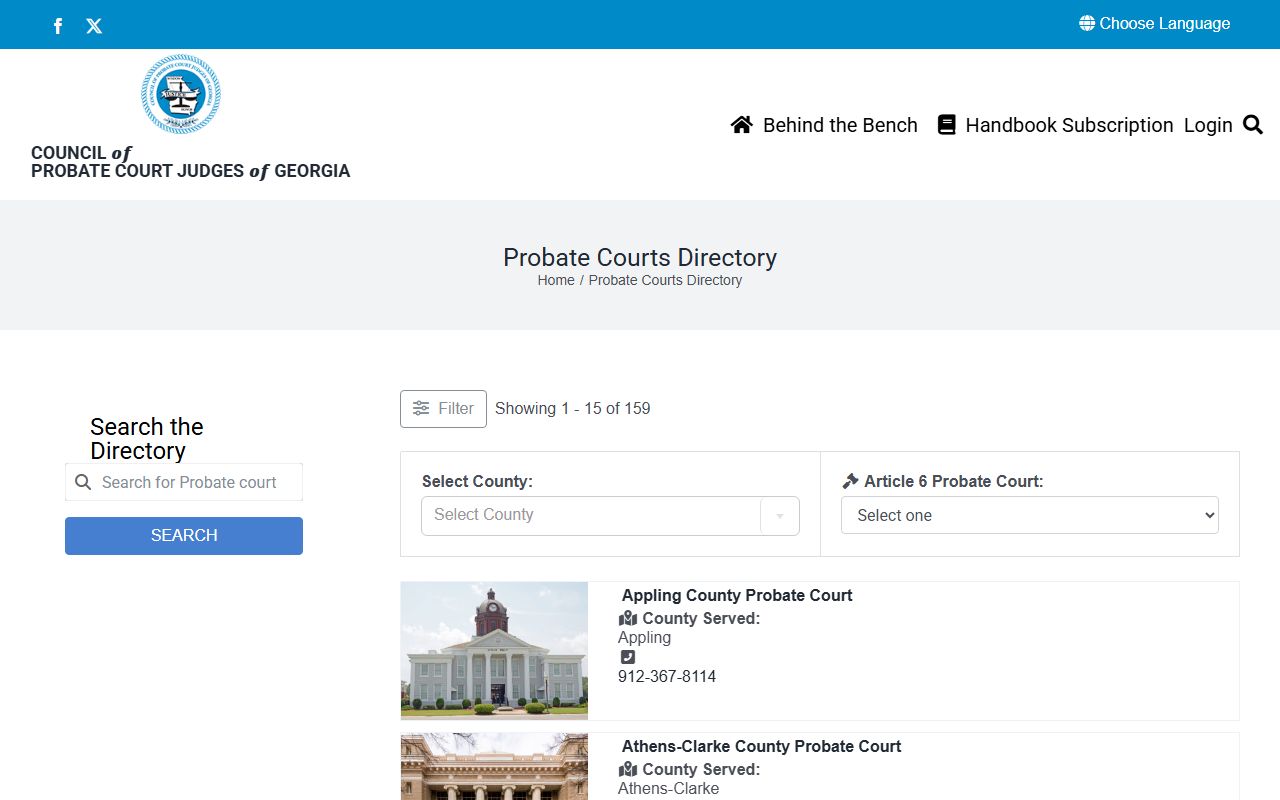
Use the directory to find phone numbers, mailing addresses, and office hours for probate courts across the state.
You can also search Terrell County records through the state's E-Access to Court Records system. Registration is free. Basic case data costs nothing. If you need documents, the first page is $2.50 and each additional page is $1.00. This lets you search from home without driving to Dawson.
Other free online resources include FamilySearch with Georgia marriages from 1754 to 1960, probate records from 1742 to 1990, and death records from 1914 to 1943. The Georgia Historic Newspapers archive has over one million pages of old newspapers with obituaries and legal notices.
Research Tips for Terrell County
Start with what you know. Write down names, dates, and places. Then work backward. Census records from 1860 to 1940 cover Terrell County and are at the Georgia Archives through Ancestry.com (free in the search room).
Terrell County was formed from Lee and Randolph counties in 1856. For ancestors before that date, check those parent counties. The Virtual Vault has "Georgia Counties: Their Changing Boundaries" to help track jurisdictions over time.
The Georgia Archives at 5800 Jonesboro Road, Morrow, GA 30260 has pre-1900 Terrell County records on microfilm. Hours are Tuesday through Saturday, 9:00 AM to 4:00 PM. Under O.C.G.A. § 50-18-71, copy fees are capped at 10 cents per page for standard public records.
- Check Lee and Randolph County records for ancestors before 1856
- Search cemetery records when vital records are missing
- Review church records for baptisms, marriages, and burials
- Use tax digests for years when census records were destroyed
- Look at the Vanishing Georgia photo collection for local images
Cities in Terrell County
Terrell County includes Dawson, Parrott, and Sasser. All genealogy records are maintained at the Terrell County Probate Court and Superior Court Clerk in Dawson. No cities in this county meet the population threshold for individual pages.
Nearby Counties
These counties border Terrell County. If your ancestors lived near county lines, check neighboring records. Lee and Randolph are the parent counties with older records.