
Find Bartow County Genealogy
Bartow County genealogy records date back to 1832, when the county was originally created as Cass County from Cherokee County land. The name changed to Bartow County in 1861. The Probate Court in Cartersville holds marriage licenses, wills, estate inventories, and guardianship files going back nearly two hundred years. The Clerk of Superior Court keeps land deeds, divorce records, and civil case files. Bartow County sits in northwest Georgia along the Etowah River, and its records reflect a long period of settlement from the 1830s forward.
Bartow County Quick Facts
Bartow County Probate Court Records
The Bartow County Probate Court is the main source for marriage and estate records. Marriage licenses go back to 1832. The court holds wills, letters of administration, guardianship files, and estate inventories. These documents are essential for anyone researching Bartow County family lines.
The courthouse is at 135 W. Cherokee Avenue in Cartersville. You can visit in person or submit a mail request with a self-addressed stamped envelope and check or money order. Under O.C.G.A. § 15-9-30, the Probate Court has jurisdiction over wills, estates, guardianships, conservatorships, and marriage licenses. Certified copies cost $2.50 for the first page and $0.50 for each page after. Call before visiting to check current fees and hours.
Note: Bartow County was originally named Cass County when it was created in 1832. It was renamed Bartow County in 1861. Older records may be filed under either name, so check both when searching at the Georgia Archives.
| Address | 135 W. Cherokee Avenue, Cartersville, GA 30120 |
|---|---|
| Phone | (770) 387-5025 |
Bartow County Superior Court Genealogy
The Clerk of Superior Court holds land records, divorce files, and civil and criminal case records from 1832. Land deeds show property transfers within families across generations. Divorce records list children, property, and ages. Civil case files reveal estate disputes and other connections between family members that might not show up elsewhere.
Under O.C.G.A. § 50-18-70, most court records are open to the public. The Open Records Act under O.C.G.A. § 50-18-71 caps copy fees at 10 cents per page for standard documents from public agencies. Tax digests at the Superior Court fill in gaps where census data is missing. Georgia lost census records for 1790, 1800, 1810, and 1890. For Bartow County, tax digests from the 1830s onward help locate ancestors and show what property they held.
The Civil War had a major impact on Bartow County. Union forces occupied Cartersville in 1864, and some courthouse records from the war period may be incomplete. Check the Georgia Archives for microfilmed copies of any damaged or missing records.
Vital Records for Bartow County Genealogy
Georgia began statewide vital records in 1919 under O.C.G.A. § 31-10-9. For Bartow County births and deaths before 1919, use county-level sources. Church records, cemetery transcriptions, and family Bibles are the best options for this period.
Birth and death certificates from 1919 onward are available through the Georgia Department of Public Health or the Bartow County Health Department. First copies cost $25, extra copies cost $5. Under O.C.G.A. § 31-10-26, certified birth certificates are restricted to the person named, parents, grandparents, adult siblings, adult children, spouses, or legal guardians. Death certificates are more open for genealogy use.
The Georgia Virtual Vault has free death certificates from 1919 to 1943. FamilySearch.org has Georgia death records from 1914 to 1943 indexed at no cost.
Bartow County Online Genealogy Resources
The Georgia Probate Courts Directory has current contact details for the Bartow County Probate Court along with every other probate court in the state.
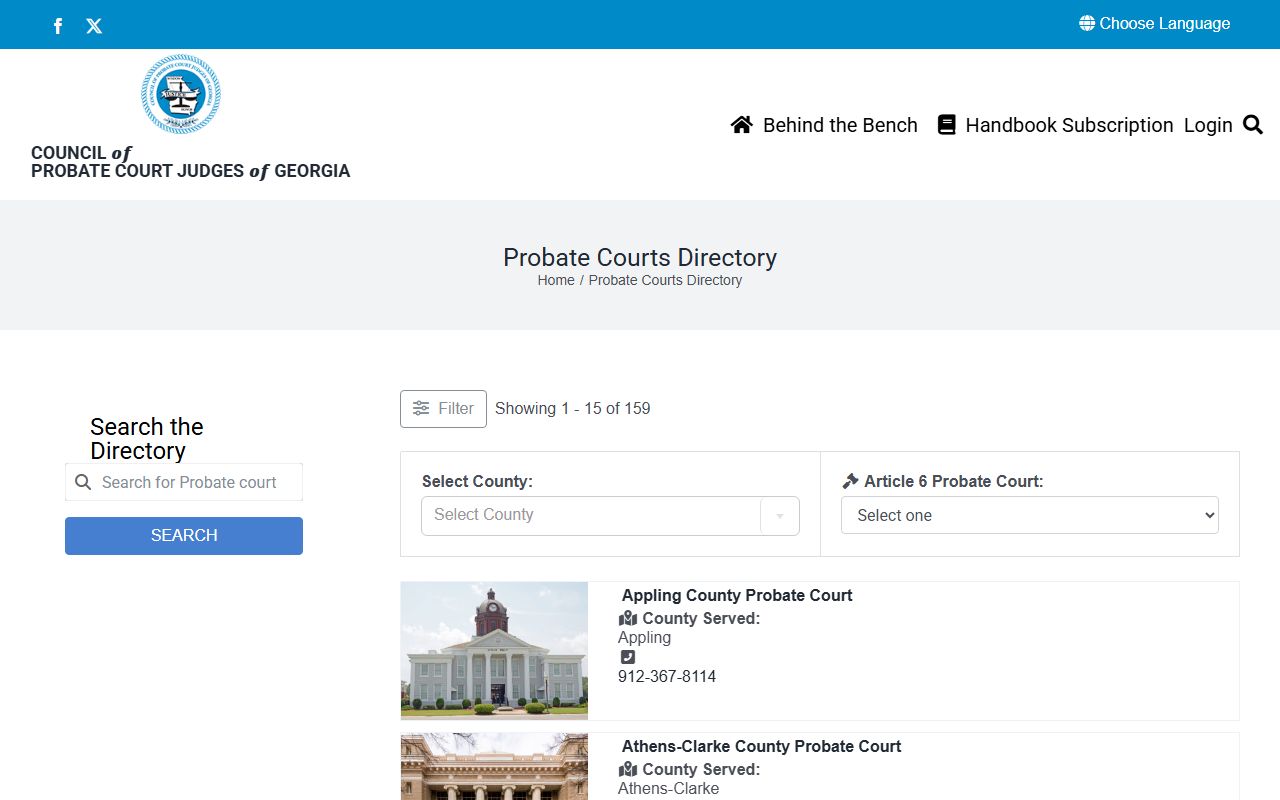
Use this directory to confirm addresses and phone numbers before contacting the courthouse in Cartersville.
Free genealogy resources online include FamilySearch with Georgia marriages from 1754 to 1960 and probate records from 1742 to 1990. The Georgia Historic Newspapers archive has over one million pages of old newspapers with obituaries and legal notices. You can also use the E-Access to Court Records system to search Bartow County court records from home.
Note: Marriage records from 1952 to 1996 were also filed at the state level with the Georgia Department of Public Health, giving you another source for Bartow County marriages from that era.
Research Tips for Bartow County
Start with what you know. Write down every name, date, and place connected to your Bartow County family, then work backward one generation at a time.
Census records are a strong next step. Federal census data from 1840 to 1940 is available at the Georgia Archives through Ancestry.com (free in the search room). Keep in mind that the county was named Cass County until 1861, so census records from 1840 and 1850 will list it under that name. The 1850 census was the first to list every person in the household with their name and age. The Georgia Archives at 5800 Jonesboro Road, Morrow, GA 30260 is open Tuesday through Saturday, 9:00 AM to 4:00 PM.
- Check cemetery records when vital records are not available
- Search church records for baptisms, marriages, and burials
- Look at Family Bible records (45 volumes on microfilm at Georgia Archives)
- Use the Vanishing Georgia collection for historical Bartow County photos
Georgia has 159 counties, and boundary lines changed often. Bartow County was created from Cherokee County in 1832 as part of the Cherokee land lottery. The Virtual Vault has "Georgia Counties: Their Changing Boundaries" to help you track which county your ancestors were counted in at any given time.
Cities in Bartow County
Bartow County includes the city of Cartersville, which is the county seat. All genealogy records for cities in this county are maintained at the Bartow County Probate Court and Superior Court Clerk in Cartersville.
Nearby Counties
These counties border Bartow County. If your ancestors lived in northwest Georgia, check records in neighboring counties as well. County lines in this area changed during the 1830s when Cherokee lands were divided.